Property management exterior cleaning built around the property.
Commercial window and exterior-cleaning work is easier to manage when the property, surfaces, schedule, access, and closeout requirements are defined before crews arrive. Eastside organizes one-time and recurring commercial work around the way each site or portfolio actually operates.
Exterior cleaning for managed commercial properties
Eastside is a fourth-generation family window-cleaning and exterior-cleaning business with roots dating to 1927. We work with property managers, facility teams, portfolio managers, engineers, and operations teams responsible for active commercial properties throughout Southern California.
The assignment may involve one building, several buildings at one address, or multiple properties with different needs. Our role remains focused on commercial window cleaning and exterior cleaning. For a broader overview of the available scopes, review Commercial Services.
Recurring service built around a defined scope
A recurring plan should identify more than a service name and a frequency. It can define the property, buildings, elevations, zones, entrances, common areas, storefronts, pressure-washing areas, approved work windows, access assumptions, site contacts, and known exclusions included in each visit.
Different services do not have to follow the same schedule. Storefront glass may need attention more often than exterior building glass. Pressure washing can follow a separate periodic cycle, while building washing may be scheduled less frequently. Restoration remains a separate, condition-based scope unless it is specifically approved.
Commercial window cleaning and storefront maintenance
Commercial window cleaning can be organized by building, elevation, floor, glass type, interior or exterior scope, and access method. A recurring plan can separate customer-facing glass, common-area glass, exterior building glass, and other included surfaces so the property team knows what belongs in each service cycle.
Storefront window cleaning may follow a different schedule from larger building-glass work. When a property includes retail, office, medical, campus, or mixed-use areas, the written scope should identify which entrances, storefronts, interior areas, and exterior elevations are included.
Pressure washing and building washing
Pressure washing is generally suited to appropriate hardscape and high-use exterior areas such as sidewalks, entries, walkways, courtyards, parking areas, loading docks, service corridors, and trash areas. Surface condition, drainage, nearby activity, and realistic cleaning limits still need to be reviewed.
Building washing addresses facades, exterior walls, architectural surfaces, entry elevations, storefront surrounds, and other vertical surfaces using methods appropriate to the material and condition. Keeping hardscape and facade scopes distinct helps avoid confusion about methods, access, and expected results.
Multi-building and portfolio coordination
Larger assignments may be sequenced by building, zone, property, location, service type, route, or approved work window. Each location can keep its own included surfaces, contacts, access requirements, and service frequency while the broader program follows a consistent planning and communication structure.
This approach helps property teams keep repeated work organized without forcing every site into the same scope. It also makes it easier to identify what has been completed, what remains, which exceptions need attention, and whether a condition belongs in the recurring plan or requires separate approval.
Working around tenants, customers, employees, and visitors
Managed properties often remain active during exterior cleaning. Depending on the property, planning may involve tenants, customers, employees, patients, students, pedestrians, entrances, deliveries, loading areas, parking, equipment staging, hose routing, wet areas, noise restrictions, security procedures, access restrictions, and approved work hours.
Controls and sequencing should match the actual site. When required, the written scope can identify work zones, pedestrian or vehicle considerations, entry coordination, property contacts, and timing restrictions rather than assuming the same controls apply at every location.
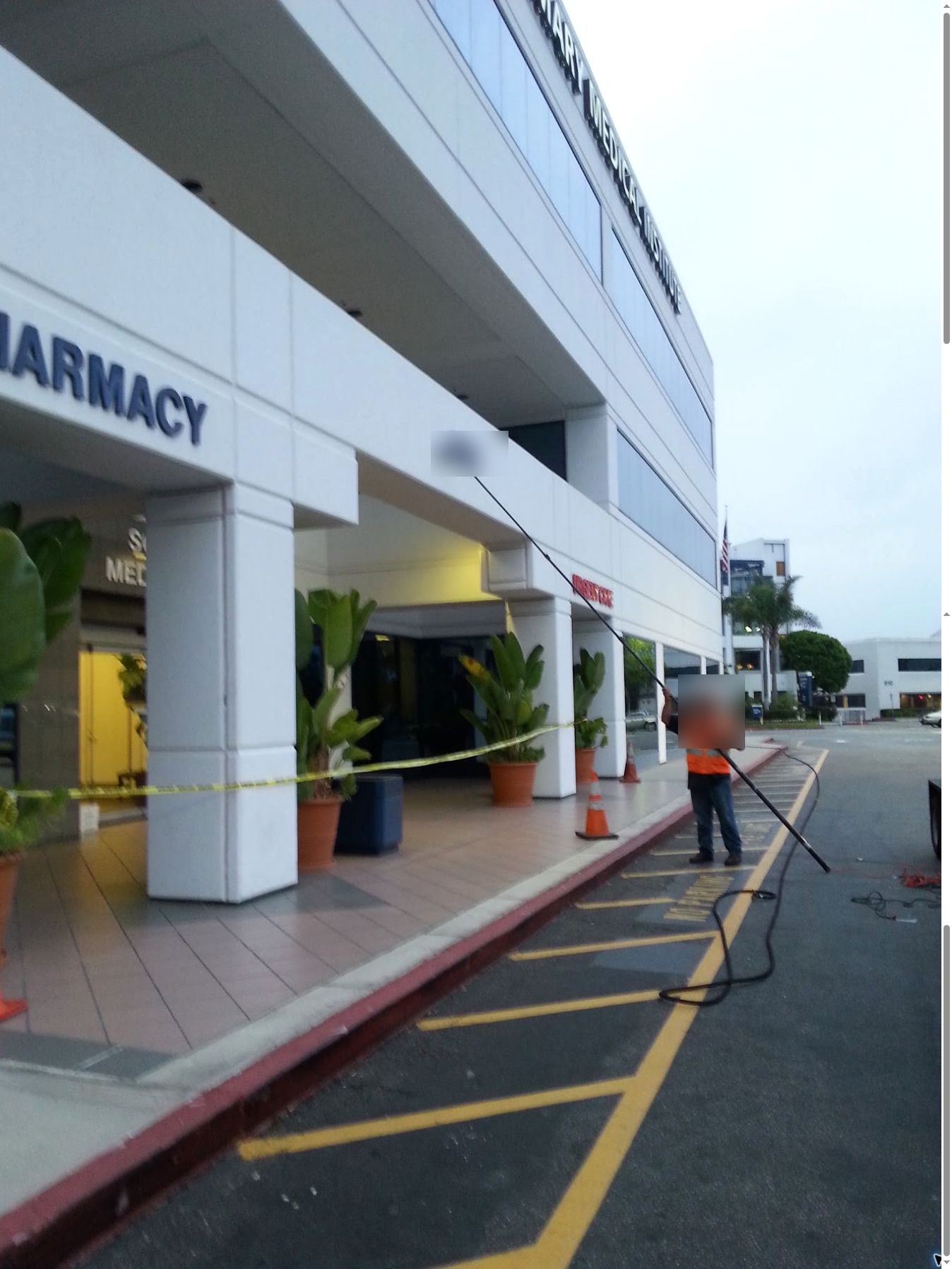
Access planning for multi-story and difficult areas
Access may involve ground-level methods, water-fed poles, traditional mop-and-squeegee work, ladders, scissor lifts, boom lifts, swing stages, fall-protection systems, or a combination selected for the property. The proposal should identify the planned access method where it materially affects the scope, schedule, staging, or customer responsibilities.
Multi-story work may also require space for equipment delivery, approved staging areas, lift paths, ground conditions, clearance from parked vehicles, security access, or coordination around entrances. Equipment ownership is not assumed; the goal is to define the access plan appropriate to the project.
Vendor requirements and property coordination
Commercial work may involve procurement steps, work orders, purchase orders, vendor onboarding, site rules, property contacts, and required vendor documentation. Those requirements are best identified before scheduling so they can be reflected in the proposal and field plan.
The property team should also identify who can approve changes, provide access, answer site questions, and receive completion information. A clear contact structure reduces delays and keeps decisions tied to the correct property or location.
Completion photos and service documentation
When requested and included in the scope, completion documentation may include photos, service notes, completed areas, exceptions, and condition observations. The useful format depends on the customer’s requirements and the type of work performed.
Documentation should support service verification without creating promises that do not fit the assignment. Any required photos, notes, naming conventions, recipients, or work-order closeout steps should be identified before service begins.
Routine maintenance versus restoration
Recurring cleaning is intended to maintain the surfaces listed in the approved scope. It does not automatically include restoration or correction of every existing condition. Hard-water staining, oxidation, failed coatings, bonded construction debris, scratches, failed seals, graffiti, unusual contamination, permanent staining, and pre-existing damage may require separate evaluation or may not be fully correctable.
Hard-water stain removal and glass restoration and specialty exterior cleaning can be reviewed when routine maintenance is not the appropriate method. Expected limitations should be documented before the work is approved. The practical standard remains clean, but not new.
Property types we support
Eastside’s commercial experience includes office properties, shopping centers, retail locations, hospitals and medical facilities, colleges and schools, studios and campuses, fitness facilities, industrial and logistics properties, multifamily communities, public facilities, and multi-building commercial sites.
Property type matters because access, occupants, operating hours, traffic, security, and service priorities differ. The plan should reflect how the property functions instead of applying a generic maintenance description to every assignment.
What belongs in a recurring service plan
A useful plan identifies the property or portfolio, number of buildings, included services and surfaces, approximate stories, window-cleaning scope where applicable, buildings or zones, desired service cycle, approved schedule, access assumptions, preferred work windows, on-site contacts, known restrictions, exclusions, and documentation requirements.
For a one-time project, the same information helps define the immediate scope. If the completed work reveals a practical recurring need, Eastside can prepare a separate maintenance plan for review without assuming that the customer wants an ongoing program.
Areas we serve
Property management window and exterior-cleaning support is available throughout Orange County, Los Angeles County, San Bernardino County, and Riverside County, with scheduling based on property scope and regional routing. View all service areas.
Request a property-management exterior-cleaning proposal
Send the property address or property list, property type, number of buildings, services requested, approximate stories, included areas or zones, desired schedule, one-time or recurring need, access restrictions, preferred work windows, on-site contact requirements, and current photos or plans when useful.
Eastside can use that information to determine whether a site walk is needed and prepare a written scope around the property’s actual operating requirements.