Commercial window cleaning planned around your property.
Interior, exterior, recurring, and high-access window cleaning for Southern California commercial properties—from storefronts and offices to medical facilities, campuses, industrial buildings, and multi-building portfolios.
Eastside is a fourth-generation family window-cleaning and exterior-cleaning business with roots dating to 1927.
Commercial window cleaning for active properties
Commercial glass work is not only about the glass. The scope has to fit customer and tenant hours, employee access, security procedures, loading areas, public walkways, and other property operations. Eastside plans the work sequence, access method, equipment, and schedule before the crew arrives.
Service can be structured for one building, multiple elevations, a campus, or a property-management portfolio. Exterior-only and interior-and-exterior scopes are available, with frames, ledges, mullions, and accessible surrounding details included when specified in the proposal.
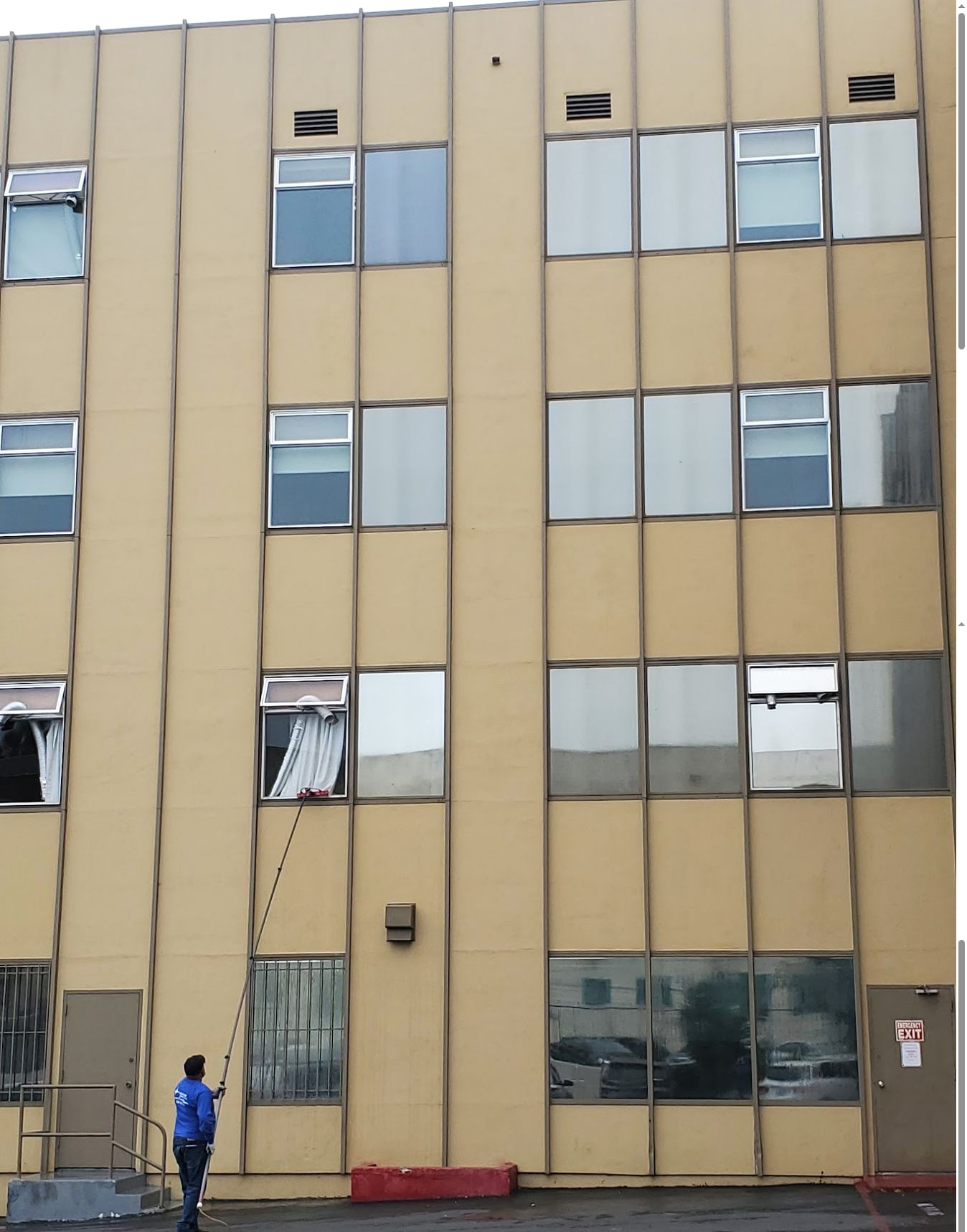
Interior and exterior glass cleaning
Exterior service may cover storefront glass, entries, office-building windows, atriums, multi-story elevations, and other accessible architectural glass. The scope identifies which elevations and glass surfaces are included so the crew and property team are working from the same plan.
Interior window cleaning is coordinated around occupied spaces, furnishings, employees, customers, patients, students, and other site conditions. Interior access, protected areas, restricted rooms, and the appropriate cleaning schedule should be identified before service.
The right access method for each elevation
No single access method fits every property. Depending on the building, Eastside crews may use water-fed poles with purified water, traditional mop-and-squeegee methods, ladders, scissor lifts, boom lifts, swing stages, fall-protection systems, or a combination of methods.
Height, setbacks, ground conditions, roof or elevation access, overhead restrictions, pedestrian areas, water availability, and equipment staging can all affect the field plan. The proposal should identify the expected access method and any conditions the property needs to coordinate.
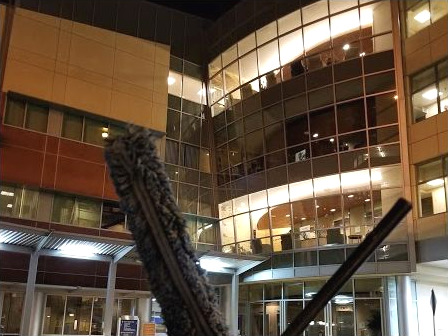
Multi-story and high-access window cleaning
Low-rise buildings and multi-story properties may require different access methods on different elevations. A project can combine ground-level methods, water-fed poles, ladders, or lift access rather than forcing one approach onto the entire building.
For lift-supported and other high-access work, planning may include equipment delivery, operating space, ground conditions, traffic or pedestrian controls, security access, and approved working hours. These requirements should be settled before mobilization whenever possible.
Recurring commercial window maintenance
Recurring service keeps storefronts, entries, office glass, and larger properties on an agreed maintenance cycle. Interior and exterior areas can be scheduled at different frequencies when their exposure and operating needs differ.
Eastside can document the buildings, elevations, included surfaces, access assumptions, and service frequency so recurring work remains consistent from visit to visit. Storefront and retail properties can also be routed through a dedicated storefront window cleaning scope.
Storefronts, offices, campuses, and large properties
Eastside works with offices, shopping centers, medical facilities, hospitals, colleges, schools, studios, fitness facilities, industrial properties, multifamily communities, campuses, and multi-building commercial sites.
Property managers and facility teams can define service by building, elevation, zone, or frequency. For portfolios and active facilities, property-management cleaning support can help coordinate access, scheduling, site contacts, and completion documentation across more than one location.
Working around tenants, employees, and visitors
Commercial cleaning often takes place while a property is occupied. Service may be scheduled early in the morning, after hours, or during another approved maintenance window when the site requires it.
The work plan may address entrances, loading areas, sidewalks, tenant or department notifications, water and hose routing, cones, caution tape, wet-floor signs, equipment staging, and other site-specific controls. Requirements vary by property and should be confirmed during scope review.
Routine cleaning versus glass restoration
Routine window cleaning removes normal surface dirt, dust, fingerprints, spider webs, and loose debris. It does not make damaged or deteriorated glass new.
Mineral deposits, oxidation, scratches, failed seals, paint, silicone, stucco, and other bonded contamination require separate evaluation. Hard-water stain removal and glass restoration should be scoped and priced separately when routine cleaning will not correct the condition.
Post-construction window cleaning
Post-construction window cleaning may involve paint, stucco, silicone, adhesive, labels, protective film, and other construction debris. These conditions require evaluation before removal because the glass type, debris, installation condition, and prior damage can affect the appropriate method and result.
Construction cleanup is not included in routine window cleaning unless it appears in the written scope. Any exclusions, limitations, test areas, or separate restoration work should be documented before service.
Related exterior-cleaning support
When a property needs more than glass care, window cleaning can be coordinated with building washing or other specialty exterior cleaning under a documented commercial scope. The Commercial Services page provides a broader overview of Eastside’s capabilities.
Areas we serve
Commercial window cleaning is available throughout Orange County, Los Angeles County, San Bernardino County, and Riverside County. View all service areas.
Request a commercial window cleaning proposal
Send the property address, building type, approximate number of stories, requested interior or exterior scope, preferred schedule, access restrictions, and whether the service is one-time or recurring. Photos, plans, or elevation information are useful for larger or more complex properties.
A site walk may be needed to confirm access, equipment, exclusions, and scheduling. Eastside will use the available information to prepare a workable scope for the property.