Commercial pressure washing for hardscape and high-use exterior areas.
Concrete, sidewalks, entries, loading areas, and other hard-working exterior surfaces collect dirt, traffic film, gum, food residue, oil-based buildup, and biological growth. Eastside plans commercial pressure washing around the surface, the condition being treated, drainage, nearby activity, and the result the material can reasonably support.
Pressure washing for active commercial properties
Eastside is a fourth-generation family window-cleaning and exterior-cleaning business with roots dating to 1927. We provide commercial pressure washing for offices, retail centers, medical properties, campuses, multifamily communities, industrial sites, hospitality properties, and other active facilities across Southern California.
The service can address a defined problem area, a property-wide reset, turnover work, or recurring exterior maintenance. Before finalizing a proposal, we review the work areas, surface conditions, access, water and drainage considerations, pedestrian and vehicle activity, operating hours, and any property restrictions that affect sequencing.
Concrete, sidewalks, entries, and walkways
High-use pedestrian areas often need more than a quick rinse. Pressure washing may be used for sidewalks, entry pads, courtyards, breezeways, patios, common-area walkways, stair landings, and other suitable hardscape identified in the scope.
The cleaning plan depends on the surface and buildup. Concrete, pavers, coated surfaces, stone, and adjacent finishes may require different pressure, flow, cleaning solutions, dwell time, and rinsing techniques. Sensitive materials or uncertain coatings may require a conservative test area before broader work begins.
Parking areas, loading docks, and trash areas
Vehicle and service zones create different conditions from pedestrian walkways. Parking areas, loading docks, service corridors, dumpster pads, and trash-area approaches may contain tire marks, tracked soil, food residue, grease, oil-based buildup, or embedded discoloration.
These areas may also require vehicle clearance, delivery coordination, temporary work zones, drainage planning, and realistic limits on stain removal. The proposal should identify the exact areas included rather than treating every paved surface on the property as part of the job.
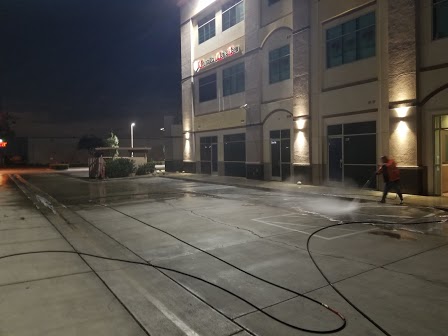
Hot-water pressure washing for stubborn buildup
Hot-water pressure washing is actively available when heat is appropriate for the surface and the type of buildup. Heated water may improve cleaning of grease, oily residue, gum, food-related soil, and other conditions that do not respond as well to cold-water washing alone.
Hot water is a tool, not a universal default. Surface compatibility, runoff, nearby finishes, drainage, temperature, cleaning solutions, and expected results still need to be reviewed. The proposal should state when hot-water equipment is planned and which work areas it will address.
Pressure, flow, chemistry, and dwell time
Effective pressure washing is not simply a matter of using the highest available pressure. The working method may combine pressure, water flow, appropriate chemistry, dwell time, agitation, and controlled rinsing. The mix depends on the surface, buildup, surrounding materials, and site conditions.
Where aggressive pressure could damage a coating, joint, finish, or adjacent material, the method should be adjusted. Building facades and delicate vertical surfaces may be better handled within a separate building washing scope using lower-pressure or surface-appropriate methods.
Working around pedestrians, vehicles, deliveries, and operations
Occupied properties require a plan for the people and activities around the work. Depending on the site, that may include phased cleaning zones, cones or wet-area controls, temporary pedestrian routing, entry coordination, vehicle clearance, delivery windows, noise limits, overspray precautions, standing-water management, and early or off-hour work.
Requirements vary by property. Controls should be applied when needed and documented in the written scope instead of promised as identical on every job.
Runoff, drainage, and surrounding surfaces
Water movement is part of the work plan. Before cleaning begins, the scope should consider slope, drains, landscaping, storefronts, doors, adjacent glass, public walkways, and other surfaces that could be affected by runoff or overspray.
Some properties have site-specific environmental, wastewater, or facility rules. Eastside can plan around requirements communicated by the customer or identified during the site review, without assuming that every location has the same controls.
Clean, but not new
Pressure washing can remove ordinary soil, biological buildup, loose debris, gum, and many common surface stains. It cannot reverse every permanent change in the material. Deep oil migration, rust, mineral deposits, oxidation, paint failure, etched surfaces, aggregate variation, and old discoloration may remain visible.
The standard should be a truthful cleaning result: clean, but not new. Significant limitations should be discussed before scheduling, and test areas may be appropriate when the probable result is uncertain.
Recurring hardscape and exterior-area maintenance
Recurring pressure washing can be organized by property, area, zone, frequency, service cycle, or work window. Entries may need more frequent attention than remote walkways; loading and trash areas may follow a separate schedule; a portfolio may rotate locations based on traffic and condition.
Eastside can coordinate recurring work with Property Management Cleaning Services when a manager needs a repeatable scope across one property or multiple sites. Each cycle should identify the included areas, access assumptions, and any condition that requires separate approval.
When the scope belongs with another service
Pressure washing is strongest when the primary need is suitable hardscape or a defined exterior surface. Facades, painted walls, architectural panels, and sensitive vertical materials may belong under building washing. Exterior glass belongs under commercial window cleaning or storefront window cleaning.
Graffiti, mineral staining on glass, oxidation, adhesive residue, and unusual materials may require hard-water stain removal and glass restoration or specialty exterior cleaning. Separating these scopes helps define the right method and a realistic expected result.
What belongs in a pressure-washing proposal
A useful request includes the property address, property type, surfaces and work areas, approximate size, current photos, access restrictions, preferred work hours, parking or loading limitations, and whether the need is one-time or recurring. Note any known oil, grease, gum, rust, mineral, paint, or drainage condition that should be reviewed.
Eastside uses that information to determine whether a site walk or test area is needed. The written proposal should identify included areas, the planned method, hot-water use when applicable, access and scheduling assumptions, exclusions, and expected limitations.
Areas we serve
Commercial pressure washing is available throughout Orange County, Los Angeles County, San Bernardino County, and Riverside County, with scheduling based on property scope and regional routing. View all service areas.
For a combined window-cleaning, facade-washing, and hardscape-maintenance scope, review Commercial Services.
Request a commercial pressure-washing proposal
Send the property address, photos, work areas, known conditions, access notes, and preferred schedule. For recurring service or multiple locations, include the desired frequency and routing needs so the proposal can reflect the actual operating plan.